Unraveling the Mystery of the Ozone Hole and Advancing Global Environmental Governance
TAIPEI, June 15, 2026 /PRNewswire/ -- The Tang Prize, one of the world's leading academic awards established to address the critical needs of the 21st century, recognizes achievements in four major fields: Sustainable Development, Biopharmaceutical Science, Sinology, and Rule of Law. Beginning today, the Tang Prize Foundation will announce the 2026 laureates over four consecutive days, with each prize carrying a cash award of NT$50 million. The first award to be announced today, June 15, is the Tang Prize in Sustainable Development, which has been awarded to American atmospheric chemist Professor Susan Solomon. Professor Solomon is recognized "for groundbreaking advances and leadership in atmospheric and climate sciences that shaped global policy for Sustainable Development."
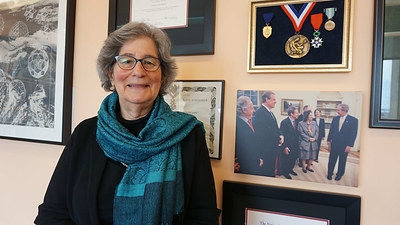
Climate change is one of the most urgent issues facing global sustainable development today. Professor Solomon is world-acclaimed for her seminal work on ozone layer depletion and climate change. By combining Antarctic field research, modeling innovations, and deep engagement with policy and the public, she has played a pivotal role in both the success of the Montreal Protocol and global climate negotiations. Her major contributions include proving that chlorofluorocarbons (CFCs) were indeed the cause of the widening ozone hole in Antarctica; proposing the heterogeneous chemical reactions that explain ozone hole formation; demonstrating that the impacts of CO₂ emissions are largely irreversible for more than 1000 years; and co-leading the production of the United Nations Intergovernmental Panel on Climate Change (IPCC)'s Fourth Assessment Report on the Physical Science Basis of Climate Change, which comprehensively synthesized key knowledge in climate science.
Professor Solomon is currently the Lee and Geraldine Martin Professor of Environmental Studies in the Department of Earth, Atmospheric and Planetary Sciences at the Massachusetts Institute of Technology (MIT). She began her scientific career at the National Oceanic and Atmospheric Administration (NOAA), where she served for 30 years before joining MIT in 2012. Over the course of her career, she has received nearly 70 international awards and honors, including the U.S. National Medal of Science, the U.S. National Academy of Sciences Award for Chemistry in Service to Society, and the Blue Planet Prize. Her receipt of the Tang Prize comes exactly forty years after she first led expeditions to Antarctica in 1986.
About the Tang Prize
Since the advent of globalization, humanity has enjoyed unprecedented benefits from advances in civilization and science. Yet a multitude of challenges, such as climate change, the emergence of new infectious diseases, the widening wealth gap, and moral degradation, have surfaced along the way. Against this backdrop, Dr. Samuel Yin established the Tang Prize in December 2012. It consists of four award categories: Sustainable Development, Biopharmaceutical Science, Sinology, and Rule of Law. Every two years, four independent and professional selection committees, comprising many internationally renowned experts, scholars, and Nobel laureates, choose Tang Prize laureates who have made substantive contributions and generated a far-reaching impact on the world, regardless of race, nationality, gender, or religion. A cash prize of NT$50 million (approximately US$1.6 million) is allocated to each category, with NT$10 million (approximately US$320,000) of it being a grant intended for research or educational outreach programs to encourage professionals in every field to examine mankind's most urgent needs in the 21st century, and become leading forces in the sustainable development of human society through their outstanding research outcomes and active civic engagement.
 View original content to download multimedia:https://www.prnewswire.co.uk/news-releases/atmospheric-chemist-susan-solomon-awarded-the-2026-tang-prize-in-sustainable-development-302800108.html

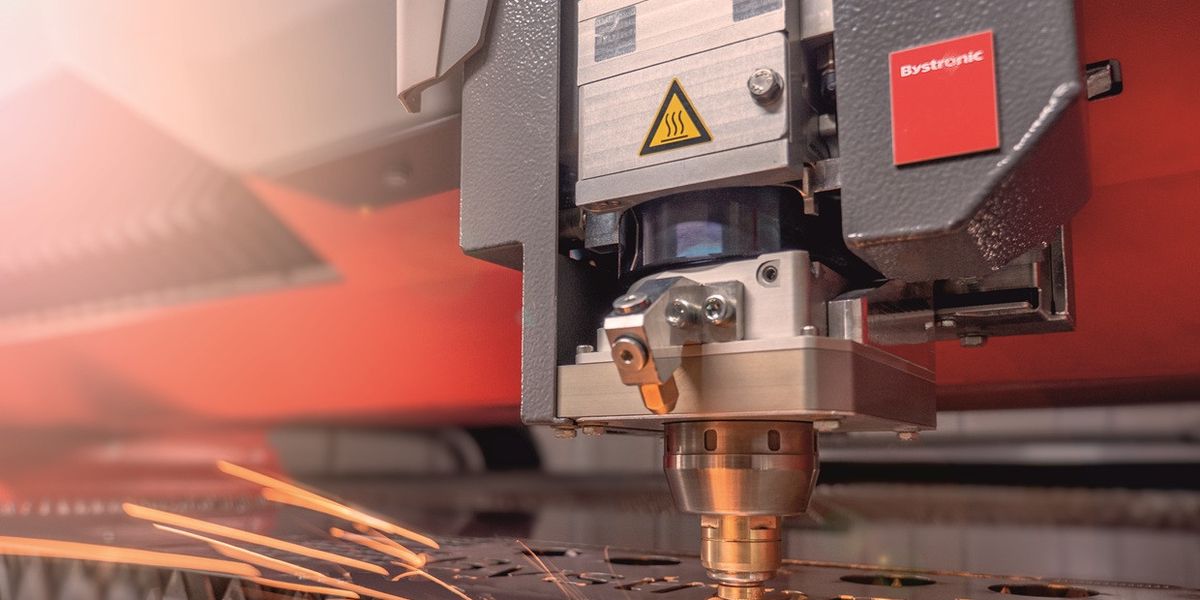
Bystronic hat seine Erwartungen für das laufende Geschäftsjahr 2026 nach unten angepasst. Der Hersteller von Maschinen für die Blechbearbeitung rechnet zwar weiterhin mit einem höheren Nettoumsatz als im Vorjahr, erwartet jedoch keine Verbesserung der Profitabilität mehr. Bereits im zweiten Quartal 2026 dürften Auftragseingang, Nettoumsatz und Ergebnis unter den bisherigen Annahmen liegen, obwohl sie gegenüber dem ersten Quartal zulegen sollen.
Das Management verweist auf anhaltend schwierige Marktbedingungen im Kerngeschäft. Während die Nachfrage nach Biegelösungen stabil bleibt, leidet das Lasergeschäft weiter unter einer schwachen Marktlage. Geringere Kapazitätsauslastung und Preisdruck im Verkauf von Einzelmaschinen wirken zusätzlich auf die Marge. Hinzu kommt, dass der Trend zu stärker automatisierten Lösungen zwar den Auftragsbestand stützt, die Projekte jedoch längere Laufzeiten haben und sich der hohe Auftragsbestand dadurch langsamer in Nettoumsätze umwandelt.
Einen Lichtblick liefert die neu geschaffene Geschäftseinheit Bystronic Rofin. Sie trägt nach Unternehmensangaben weiterhin positiv zum Konzernergebnis bei, gestützt von einer robusten Nachfrage nach Anwendungen im Halbleiterbereich. Dieser Bereich soll auch dazu beitragen, dass der Konzernumsatz 2026 insgesamt über dem Niveau des Vorjahres liegt, auch wenn die Ergebnisqualität im Vergleich zu 2025 zurückbleiben dürfte.
Konkrete Zahlen zu Auftragseingang, Umsatz und Ergebnis nannte Bystronic bislang nicht. Ausführlichere Informationen zur Geschäftsentwicklung und zum weiteren Ausblick will das Unternehmen mit dem Halbjahresbericht vorlegen, der am 23. Juli veröffentlicht werden soll. Dann dürfte sich zeigen, in welchem Ausmass der Druck im Lasergeschäft und die Verzögerungen bei Automationsprojekten auf die Jahresziele durchschlagen – und wie stark Bystronic Rofin diese Effekte im laufenden Jahr abfedern kann.