SEOUL, South Korea, Sept. 13, 2026 /PRNewswire/ -- Hyundai Motor Group (the Group) announced that it has put its Data Flywheel into full operation, marking a new phase in its autonomous driving technology strategy. The system creates a virtuous cycle of data collection, AI training, validation and deployment to secure a competitive advantage through accelerated learning and technology development.
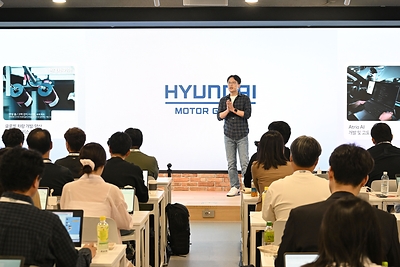
During the Group's "HMG Autonomous Driving Media Day" at 42dot headquarters in Gyeonggi Province, Korea, the Group presented its autonomous driving development strategy, technology roadmap, key achievements and implementation plans. The presentation underscored the Group's strategic positioning in the global autonomous driving technology competition and detailed how integrated data and AI systems form the foundation for next-generation vehicle technology.
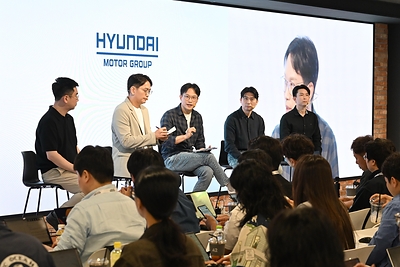
At the event, the Group identified the Data Flywheel as a key element of its autonomous driving competitiveness and shared the operational framework and execution strategy that transforms large-scale real-world driving data into continuous technology improvements.
42dot also introduced key technologies and the development progress for the Group's proprietary autonomous driving artificial intelligence, Atria AI, while outlining the background and future plans for its Vision-Language-Action (VLA) technology development initiative.
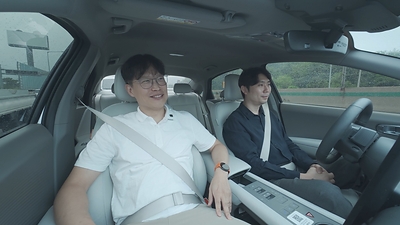
In line with the event, the Group unveiled footage of an Atria AI-equipped SDV Testbed navigating complex urban traffic without driver intervention. Operating at a Level 2++ capability, the autonomous driving system showcased in the footage illustrates how the Data Flywheel is enabling a continuous cycle of learning, validation and performance improvement. The footage is available on the Group's official YouTube channel.
"Autonomous driving competition is no longer about comparing specific features. Competitiveness is determined by how much data you secure, how quickly you learn and how effectively you can reflect those results in actual products and services. At its core, autonomous driving competitiveness comes down to having systems that enable continuous, rapid learning. Hyundai Motor Group will develop autonomous driving technology that customers can trust, based on a virtuous cycle of data, AI and validation. Our goal is to ensure the safety and quality levels customers can trust while we learn and improve rapidly." – Minwoo Park, President and Head of Advanced Vehicle Platform (AVP) Division at Hyundai Motor Group and CEO of 42dot
About Hyundai Motor Group
More information about Hyundai Motor Group can be found at: http://www.hyundaimotorgroup.com or Newsroom: Media Hub by Hyundai, Kia Global Newsroom, Genesis Newsroom
 View original content to download multimedia:https://www.prnewswire.co.uk/news-releases/hyundai-motor-group-accelerates-autonomous-driving-innovation-with-ai-powered-data-flywheel-302876372.html

Roche versucht nach einer Phase von Forschungsrückschlägen und Belastungen durch auslaufende Patente, das Tempo in der Medikamentenentwicklung deutlich zu erhöhen. Am Pharma-Investorentag unterstrich die Pharmasparte des Basler Konzerns den Anspruch, in Forschung und Entwicklung weiter zur Spitzengruppe zu gehören. Zentral sind dabei ein strengeres Management der Pipeline, Effizienzprogramme und der verstärkte Einsatz künstlicher Intelligenz entlang der Wertschöpfungskette.
Pharma-Chefin Teresa Graham verwies auf eine sichtbar verbesserte Bilanz seit dem letzten „Pharma Day“: In zehn zulassungsrelevanten Studien habe Roche die gesetzten Ziele erreicht, sechs Programme seien in die zulassungsrelevende Phase vorgerückt, drei weitere in Phase II. Insgesamt verfügt Roche nach eigenen Angaben über bis zu 20 neue Wirkstoffe, die bis 2030 auf den Markt kommen könnten. Einzelne Kandidaten wie das Brustkrebsmittel Giredestrant traut der Konzern dabei jeweils Spitzenumsätze im zweistelligen Milliardenbereich zu.
Um diese Ambitionen abzusichern, verschärft Roche die internen Selektionskriterien. Ende 2023 führte der Konzern mit „The Bar“ einen neuen Bewertungsrahmen für die Pipeline ein. Nur Wirkstoffkandidaten, die klar definierte Anforderungen erfüllen, werden weiterentwickelt. Medizinchef Levi Garraway bezeichnete „The Bar“ als Leitbild für Forschung und Entwicklung. Die Auswahl potenzieller Projekte sei damit spürbar strenger geworden – mit dem Ziel, Ressourcen konsequent auf die Erfolg versprechendsten Programme zu konzentrieren und die Erfolgsquote in späten Studienphasen zu stabilisieren oder weiter zu erhöhen.
Parallel dazu treibt Roche ein Effizienzprogramm voran, um Mittel aus weniger renditestarken in wachstumsstärkere Projekte umzuschichten. Die Entwicklung neuer Medikamente soll deutlich beschleunigt werden, was insbesondere in umkämpften Indikationen wie Onkologie sowie in wachstumsstarken Bereichen wie Herz-Kreislauf- und Stoffwechselerkrankungen an Bedeutung gewinnt. Damit will Roche erwartete Umsatzeinbussen durch Patentabläufe mehr als kompensieren und sich bis zum Ende des Jahrzehnts ein Portfolio aufbauen, das von mehreren potenziellen Blockbustern getragen wird.