- Indonesia emerges as KT&G's largest overseas production base, with annual cigarette production capacity set to reach up to 35 billion sticks, strengthening its Asia-Pacific hub
- KT&G enters the final stage of its KRW 2.4 trillion overseas CAPEX program, backed by strengthened financial stability and continued commitment to enhancing shareholder and corporate value
SEOUL, South Korea, Oct. 7, 2026 /PRNewswire/ -- KT&G (CEO Bang Kyung-man) has begun full-scale operations at its new plant in Indonesia, completing a five-country global production system spanning South Korea, Indonesia, Russia, Kazakhstan, and Türkiye.
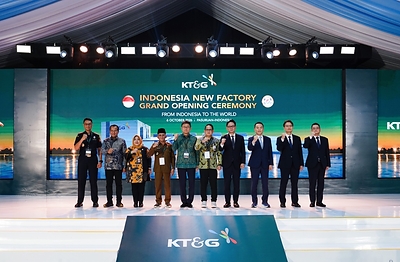
To mark the start of full-scale production, KT&G held an opening ceremony at the new plant in Pasuruan, East Java, on October 6 (local time). The event was attended by CEO Bang Kyung-man, KT&G executives and employees, Adhy Karyono, Regional Secretary of East Java Province, Yoon Soon-goo, Ambassador of the Republic of Korea to Indonesia, and other distinguished guests.
Indonesia is one of the world's major tobacco markets and an important export hub for the Asia-Pacific region. KT&G first entered the Indonesian market in 2011 through the acquisition of a local company. Since then, the company has launched ESSE, its globally leading super-slim cigarette brand, and JUARA, a brand developed specifically for Indonesia, and now ranks fourth in Indonesia's cigarette market by market share.
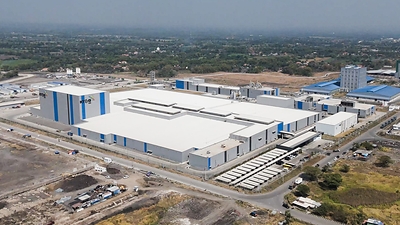
To meet growing demand in Indonesia and overseas markets, KT&G has built a new plant alongside its existing facility. Following an agreement with Indonesia's Ministry of Investment/Investment Coordinating Board (BKPM) in September 2023, the company broke ground on the new plant in April 2024 and began trial operations in the first half of 2026.
The new plant has now entered stable production. Once all nine cigarette manufacturing lines are installed, it will have an annual production capacity of up to 21 billion sticks. Combined with the existing plant's annual capacity of 14 billion sticks, KT&G's total cigarette production capacity in Indonesia is expected to reach up to 35 billion sticks, making Indonesia the company's largest overseas production base.
Leveraging Indonesia's strategic location between the Pacific and Indian Oceans, cigarettes produced at the new plant will be supplied not only to the Indonesian domestic market but also to overseas markets including Taiwan, Mongolia, Nigeria, and India. The new facility is expected to serve as a key export hub, supporting KT&G's expansion across the Asia-Pacific region and other global markets.
The construction of KT&G's new overseas plants is part of the growth investment program the company launched in January 2023. Following the completion of its new plant in Kazakhstan in April 2025 and the start of full-scale operations at the new Indonesia plant, KT&G has completed a significant portion of its previously announced KRW 2.4 trillion overseas capital expenditure program, unveiled in November 2024. Backed by strengthened financial stability, the company will continue to enhance shareholder value through share buybacks and cancellations, as well as increased dividend payouts.
Looking ahead, KT&G's four overseas production bases in Indonesia, Russia, Kazakhstan, and Türkiye are expected to have a combined annual production capacity of up to 65 billion sticks. By leveraging economies of scale and improving logistics efficiency, the company plans to increase the share of overseas production to more than 60% of its total production by 2028.
Bang Kyung-man, CEO of KT&G, said, "With the new plant in Indonesia as the final piece, KT&G has completed its large-scale overseas investment program and established a five-country global production system that will serve as a solid foundation for our global business and future growth. By strategically leveraging our production bases in Korea and overseas, we will maximize profitability, strengthen the competitiveness of our global business, and continue to increase shareholder and corporate value."
KT&G continues to expand its direct presence in global markets. The company currently operates six overseas subsidiaries in countries including Indonesia, Taiwan, Kazakhstan, and Uzbekistan, and six overseas branch offices in regions including Europe, Mongolia, and China.

 View original content to download multimedia:https://www.prnewswire.co.uk/news-releases/ktg-begins-full-scale-operations-at-new-indonesia-plant-completing-five-country-global-production-system-302900993.html

Roche versucht nach einer Phase von Forschungsrückschlägen und Belastungen durch auslaufende Patente, das Tempo in der Medikamentenentwicklung deutlich zu erhöhen. Am Pharma-Investorentag unterstrich die Pharmasparte des Basler Konzerns den Anspruch, in Forschung und Entwicklung weiter zur Spitzengruppe zu gehören. Zentral sind dabei ein strengeres Management der Pipeline, Effizienzprogramme und der verstärkte Einsatz künstlicher Intelligenz entlang der Wertschöpfungskette.
Pharma-Chefin Teresa Graham verwies auf eine sichtbar verbesserte Bilanz seit dem letzten „Pharma Day“: In zehn zulassungsrelevanten Studien habe Roche die gesetzten Ziele erreicht, sechs Programme seien in die zulassungsrelevende Phase vorgerückt, drei weitere in Phase II. Insgesamt verfügt Roche nach eigenen Angaben über bis zu 20 neue Wirkstoffe, die bis 2030 auf den Markt kommen könnten. Einzelne Kandidaten wie das Brustkrebsmittel Giredestrant traut der Konzern dabei jeweils Spitzenumsätze im zweistelligen Milliardenbereich zu.
Um diese Ambitionen abzusichern, verschärft Roche die internen Selektionskriterien. Ende 2023 führte der Konzern mit „The Bar“ einen neuen Bewertungsrahmen für die Pipeline ein. Nur Wirkstoffkandidaten, die klar definierte Anforderungen erfüllen, werden weiterentwickelt. Medizinchef Levi Garraway bezeichnete „The Bar“ als Leitbild für Forschung und Entwicklung. Die Auswahl potenzieller Projekte sei damit spürbar strenger geworden – mit dem Ziel, Ressourcen konsequent auf die Erfolg versprechendsten Programme zu konzentrieren und die Erfolgsquote in späten Studienphasen zu stabilisieren oder weiter zu erhöhen.
Parallel dazu treibt Roche ein Effizienzprogramm voran, um Mittel aus weniger renditestarken in wachstumsstärkere Projekte umzuschichten. Die Entwicklung neuer Medikamente soll deutlich beschleunigt werden, was insbesondere in umkämpften Indikationen wie Onkologie sowie in wachstumsstarken Bereichen wie Herz-Kreislauf- und Stoffwechselerkrankungen an Bedeutung gewinnt. Damit will Roche erwartete Umsatzeinbussen durch Patentabläufe mehr als kompensieren und sich bis zum Ende des Jahrzehnts ein Portfolio aufbauen, das von mehreren potenziellen Blockbustern getragen wird.