Certification Validates LG's Advanced Thermal Management Technology and Solidifies
the Partnership With NVIDIA, Accelerating AI Infrastructure Expansion
News Summary
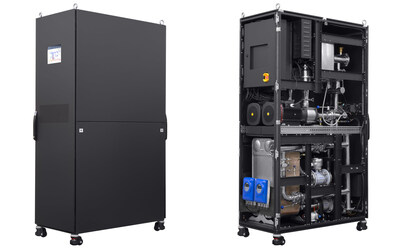
SEOUL, South Korea, July 27, 2026 /PRNewswire/ -- LG Electronics (LG) has secured official NVIDIA certification for its 600kW Coolant Distribution Unit (CDU). This milestone validates the reliability and efficiency of LG's liquid cooling solutions and thermal management technology with NVIDIA's AI infrastructure standards, supporting the company's continued expansion in the AI data center cooling market.
Reliable Partner for Global Hyperscalers
As one of the select few companies globally to pass NVIDIA's technical verification process, LG successfully validated its 600kW CDU against more than 100 technical evaluation criteria. These metrics are designed to standardize cooling performance, reliability and failover capabilities for high-density AI Factories.
The certification marks a strategic milestone for LG, strengthening the company's position as an officially verified NVIDIA partner for AI Factory infrastructure. For global hyperscalers and data center operators, this designation provides greater confidence in supplier selection by reducing procurement risks and accelerating qualification for large-scale AI infrastructure deployments.
Chip-To-Chiller Cooling Solution Provider
LG's NVIDIA-certified 600kW CDU is engineered to manage the thermal demands of high-heat AI GPUs. By implementing a Direct-to-Chip (DTC) liquid cooling solution that delivers coolant directly to heat-generating components such as GPUs and CPUs, the unit creates a highly efficient "hybrid cooling" system that operates in synergy with existing air-cooling infrastructure.
The unit is designed to achieve a temperature control precision of ±0.25 degrees Celsius*, helping enhance system thermal stability and support reliable AI server operation. It also integrates virtual sensor technology for real-time monitoring and leak detection capabilities. Paired with LG's Data Center Cooling Control Manager (DCCM), the solution enables predictive control and centralized monitoring, while supporting seamless integration with data center management systems through standard communication protocols.
To ensure comprehensive reliability, LG evaluates these solutions at its dedicated Chip-to-Chiller validation site in Pyeongtaek. Here, the company tests system-wide transient responses, temperature changes and low-load stability across the entire cooling chain—from the AI chip load and cold plates to the CDU and chiller. By meeting NVIDIA's strict failover requirements, the CDU is engineered to maintain operational stability even under highly demanding conditions.
LG aims to further solidify its position as a trusted AI data center infrastructure partner with a comprehensive "Chip-to-Chiller" portfolio, offering end-to-end thermal management solutions from the chip level to the cooling plant. The company's end-to-end offering includes chillers that produce chilled water, CDUs that distribute coolant and cold plates that deliver cooling directly to AI chips—the core components of liquid cooling systems for AI data centers.
Expanding AI Infrastructure Capabilities
This certification serves as the starting point for LG's broader AI infrastructure business expansion. Moving forward, LG plans to sequentially secure NVIDIA certifications for entire large-capacity CDU lineups, including its 1MW, 2.5MW and 4MW models.
Backed by 60 years of engineering expertise in the HVAC sector, LG's CDUs are designed for high-density AI data center environments, offering precise temperature control, advanced control capabilities and high reliability. The company also strengthens its competitiveness by producing key components in-house, including inverter systems and magnetic bearing compressors—core technologies widely applied across its chiller portfolio.
LG has recently secured major global data center cooling projects, including hyperscaler facilities in North America and the Sinar Mas data center, SM+ Data Center's flagship AI-ready facility in Jakarta, Indonesia. By leveraging its core technological capabilities, LG aims to expand global orders and strategic partnerships in the next-generation AI data center market.
"As AI data centers continue to scale, the need for highly reliable liquid cooling solutions has never been greater," said James Lee, president of the LG ES Company. "Leveraging our advanced cooling technologies together with the LG Group's integrated infrastructure capabilities, we are expanding our AI infrastructure business with end-to-end solutions that help enable Physical AI, where AI creates value in real-world environments."
* Performance results, including temperature control precision and component lifespan, may vary depending on actual operating environments, server loads and conditions. |
About LG Electronics Eco Solution Company |
The LG Eco Solution Company (ES) offers advanced air conditioning solutions, including chillers, for diverse sectors and climates. Committed to exceptional HVAC performance, the ES Company aims to enhance indoor comfort and well-being with innovative air care products. Leveraging deep industry expertise, it offers digitalized HVAC solutions designed for better life. As a trusted partner, the company integrates cutting-edge technology into daily operations while offering ongoing support. For more information, please visit www.LG.com/global/business/hvac. |
 View original content:https://www.prnewswire.co.uk/news-releases/lg-electronics-earns-nvidia-ai-factory-validation-for-its-600kw-coolant-distribution-unit-302835090.html

Die Schweiz stimmt an diesem Wochenende über eine der umstrittensten Initiativen der vergangenen Jahre ab: „Keine 10-Millionen-Schweiz!“. Der Vorstoß der nationalkonservativen Schweizerischen Volkspartei (SVP), auch bekannt als Schweizerische Volkspartei oder Swiss People's Party, sieht vor, die ständige Wohnbevölkerung des Landes bis 2050 auf maximal zehn Millionen Menschen zu begrenzen. Nach ersten Hochrechnungen tendieren die Stimmbürgerinnen und Stimmbürger dazu, die Initiative abzulehnen – ein Ergebnis, das im Vorfeld keineswegs sicher schien.
Die Initiative, die in der Verfassung verankert werden soll, würde den Bund verpflichten, Gegenmaßnahmen zu ergreifen, sobald die Bevölkerung 9,5 Millionen erreicht. Die Schweiz zählte Ende 2025 bereits gut 9,1 Millionen Einwohner – rund 1,7 Millionen mehr als 2002. Haupttreiber des Wachstums ist die Zuwanderung. Rund 28% der im Land lebenden Menschen besitzen keinen Schweizer Pass. Viele stammen aus EU-Staaten wie Italien, Deutschland und Portugal, hinzu kommen Personen aus Drittstaaten, darunter Asylsuchende.
Unterstützer der Initiative argumentieren, das Land stoße an seine Belastungsgrenzen. Sie verweisen auf steigende Mieten, überlastete Verkehrswege, Staus sowie eine als problematisch wahrgenommene Entwicklung bei Gewalt und Kriminalität, die sie mit einer höheren Zuwanderung verknüpfen. Ziel sei es laut Kampagnenmotto, „zu bewahren, was wir lieben“. Die SVP wirbt mit auffälligen Aufklebern, Fahnen und Plakaten in Nationalfarben, um eine Begrenzung des Bevölkerungswachstums als Schutz der Lebensqualität zu präsentieren.
Gegen die Initiative stellen sich der Bundesrat, das Parlament, die Kantone sowie die meisten übrigen großen Parteien, gestützt von Wirtschaftsverbänden und Gewerkschaften. Sie warnen, ein starres Bevölkerungs- und damit faktisches Zuwanderungslimit könne den bereits bestehenden Arbeitskräftemangel verschärfen. Laut Bundesamt für Statistik waren im ersten Quartal 2026 rund 1,87 Millionen ausländische Erwerbstätige in der Schweiz beschäftigt. Etwa vier von fünf kamen aus EU- oder EFTA-Staaten oder dem Vereinigten Königreich, der Rest aus Drittstaaten. Viele arbeiten in Bereichen wie Gesundheitswesen, Bau und Gastgewerbe – Sektoren, die stark auf Personal aus dem Ausland angewiesen sind.
Ein weiterer Konfliktpunkt ist das Verhältnis zur Europäischen Union. Die Initiative sieht vor, dass die Schweiz in letzter Konsequenz das Abkommen über die Personenfreizügigkeit mit der EU kündigen müsste, sollte die Obergrenze sonst nicht zu halten sein. Gegner befürchten, dies könnte die bilateralen Beziehungen und den Zugang zum europäischen Arbeitsmarkt belasten. Befürworter halten dem entgegen, nur mit klaren quantitativen Vorgaben lasse sich der Druck auf Wohnungsmarkt, Infrastruktur und öffentliche Dienste nachhaltig begrenzen.
Parallel zur Abstimmung über die 10-Millionen-Grenze entscheiden die Stimmberechtigten auch über eine Verschärfung des Zivildienstgesetzes. Im Fokus der innenpolitischen Debatte steht jedoch vor allem die Frage, wie die Schweiz Wachstum, Wohlstand und gesellschaftlichen Zusammenhalt künftig austarieren will. Das Ergebnis der Volksabstimmung dürfte zwar die Initiative selbst klären, die Grundsatzdiskussion über Zuwanderung, Arbeitskräftebedarf und Lebensqualität in der Alpenrepublik jedoch kaum beenden.