Enhancing Driver Safety, Hybrid eCall Enables Seamless Emergency Communication Across 2G to 5G Networks in Compliance with Europe's 2027 NG eCall Requirements
News Summary
SEOUL, South Korea, April 27, 2026 /PRNewswire/ -- LG Electronics (LG) showcased its Hybrid Emergency Call (Hybrid eCall) solution at the 37th Meeting Week of the 5G Automotive Association (5GAA) – a global cross-industry organization driving the development of connected mobility solutions – held in Gothenburg, Sweden, on April 23. The solution highlights LG's telematics control unit (TCU) capabilities and its continued focus on vehicle connectivity technologies aligned with evolving European safety regulations.

Hybrid eCall Enabling Next-Generation Safety and Regulatory Compliance
eCall is an in-vehicle emergency communication system that automatically transmits critical information – such as vehicle location, vehicle data and time of incident – to the nearest public safety answering point when a severe collision is detected or airbags are deployed. The system has been mandatory for all new vehicles in Europe since 2018.
Starting in 2027, all new-model vehicles sold in Europe will be required to support Next Generation eCall (NG eCall) operating over 4G and 5G networks to enable faster and more accurate transmission of accident data. eCall is directly linked to occupant safety, making reliable transmission of accident data across available networks essential. In response, hybrid approaches that can operate across both legacy and next-generation networks are receiving increased attention.
LG's Hybrid eCall solution is designed for reliable emergency communication across 2G, 3G, 4G and 5G networks. In real-world environments where network coverage is inconsistent, the solution automatically transitions between available networks and adapts data transmission accordingly, maintaining emergency communication while minimizing delay and data loss.
LG's End-to-End Capabilities and Proven Market Leadership
A key strength of LG's solution is its proven capability. As the No.1 company in global telematics market share,[1] LG has deployed its Hybrid eCall solution, designed to meet NG eCall requirements, in vehicles from major global automakers since last year, completing official certification and moving toward full-scale mass production.
LG's development is backed by end-to-end capabilities spanning development, testing and certification. The company's one-stop execution framework reduces reliance on external institutions and enables a faster and more effective response to automaker requirements and regulatory standards.
LG also operates in-house conformity assessment capabilities for automotive components comparable to those of accredited third-party certification organizations, supported by a standardized testing and evaluation system based on international standards. In 2024, the Vehicle Solution (VS) Standard Testing Laboratory, part of the VS R&D Laboratory, earned ISO/IEC 17025 accreditation from the Korea Laboratory Accreditation Scheme (KOLAS) and was designated an official certification lab by Europe's Global Certification Forum (GCF). In 2025, it also received recognition from North America's PCS Type Certification Review Board (PTCRB).
The lab's scope has since expanded to include compliance testing for eCall. In particular, KOLAS-accredited test reports (based on ISO/IEC 17025) are recognized globally under the International Laboratory Accreditation Cooperation Mutual Recognition Arrangement (ILAC-MRA) framework, enabling reliable certification processes and supporting regulatory compliance not only in Korea but also across major international markets.
Last year, at a 5GAA event held in Paris, LG demonstrated a satellite‑based voice communication solution for vehicles. Leveraging non‑terrestrial networks (NTN), the live demonstration marked the first instance of uninterrupted, conversation‑level voice communication while switching between terrestrial and non‑terrestrial network environments.
"We will continue to strengthen our leadership in automotive connectivity by leveraging our world-leading telematics technology and proven global competitiveness, while meeting Europe's stringent safety and regulatory standards," said Lee Sang-yong, head of VS R&D laboratory at the LG Vehicle Solution Company.
[1] Source: TechInsights, based on market share estimates. |
About LG Electronics Vehicle Solution Company
The LG Vehicle Solution Company (VS) is bringing LG's unique mobility innovations to the automotive industry. As a trusted and innovative partner, the company provides intelligent solutions including head units, displays, connectivity, ADAS vision systems, and software solutions integrating human-centered AI and automotive engineering into the modern AI/software-defined vehicle. Committed to "Driving better future mobility," the company has diversified its portfolio to further strengthen its capabilities, including automotive lighting systems, e-powertrain and cybersecurity. For more information, visit www.LG.com/global/mobility. To stay updated with the latest news, subscribe to the LG mobility newsletter, LG Loop at www.LG.com/global/mobility/newsletter and follow the LG VS Company LinkedIn channel at www.linkedin.com/company/lgvehiclesolution.
 View original content:https://www.prnewswire.co.uk/news-releases/lg-electronics-presents-hybrid-emergency-call-solution-at-5gaa-in-sweden-302752668.html

Die Schweizer Großbank UBS hat ihre Einschätzung für die Aktien des Bausoftware-Spezialisten Nemetschek deutlich verschärft und die Titel von „Neutral“ auf „Sell“ abgestuft. Das Kursziel wurde von zuvor 76 Euro auf 56 Euro gesenkt und damit in etwa auf das aktuelle Kursniveau angepasst. An der Börse gerieten die Papiere daraufhin spürbar unter Druck; seit dem Rekordhoch im August haben die Aktien bereits fast 60 Prozent an Wert verloren.
Im Mittelpunkt der Kritik von UBS-Analyst Michael Briest stehen die langjährigen Vertragsstrukturen von Nemetschek. Diese seien im ersten Jahr für Umsatz- und Cashflow-Entwicklung zwar positiv, könnten aber ab dem zweiten Jahr zunehmend belastend wirken. Aus Sicht des Experten droht sich das Vertragsmodell damit „von einem Wachstumsmotor in ein Wachstumshemmnis“ zu verwandeln. Briest sieht den bislang starken Cashflow des Unternehmens durch diese Struktur gefährdet.
Zudem verweist die UBS auf die wachsenden Verdrängungssorgen rund um Künstliche Intelligenz. Der Markt könnte die Risiken aus den langfristigen Verträgen mit den Erwartungen eines raschen Umstiegs auf KI-basierte Lösungen vermischen. In einem Umfeld, in dem technologische Innovation und Anpassungsfähigkeit an neue Software-Generationen entscheidend sind, geraten traditionelle Angebotsmodelle unter zusätzlichen Rechtfertigungsdruck.
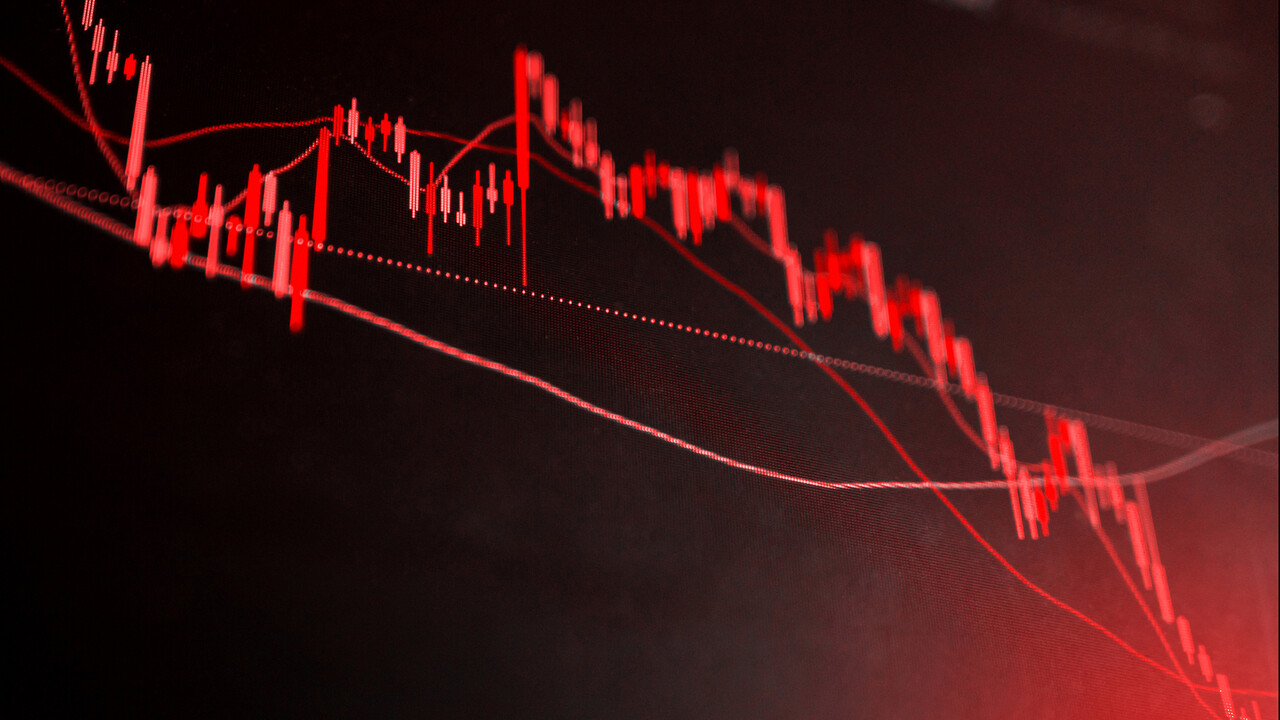
Charttechnisch bleiben die Nemetschek-Titel unter ihrer 21-Tage-Durchschnittslinie, die bereits seit dem Rekordhoch vom August als Widerstand fungiert und den kurzfristigen Abwärtstrend bestätigt. Die Herabstufung durch UBS erhöht den Druck auf das Management, die Tragfähigkeit der bestehenden Vertrags- und Produktstrategie unter Beweis zu stellen. Wie stark sich die Kombination aus möglicher Cashflow-Abschwächung und KI-Konkurrenz tatsächlich auf die mittelfristige Entwicklung von Nemetschek auswirkt, bleibt indes offen und hängt wesentlich von der Reaktion des Unternehmens und der Nachfrage seiner Kunden ab.