SINGAPORE, June 22, 2026 /PRNewswire/ -- MediSun Energy, a Singapore-based leader in integrated brine management, announced a strategic joint venture with Yanrun Membrane Technology Co., Ltd., a premier national-level high-tech electro-membrane pioneer, at the Singapore International Water Week (SIWW) 2026.
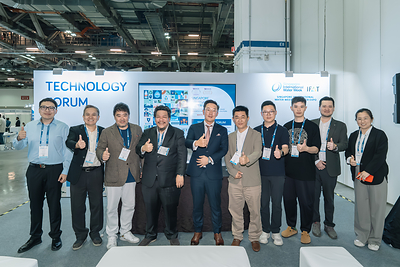
Through this strategic partnership, MediSun Energy and Yanrun will establish a new Singapore-based corporate entity, led by MediSun Energy, to serve as the exclusive global launchpad for their combined solutions outside of mainland China.
This joint venture will drive the international development, manufacturing, and distribution of a highly specialized suite of advanced systems, including Electrodialysis Bipolar Membrane (EDBM), Electrodialysis Metathesis (EDM), Electrodialysis (ED) stack systems, and Pressurised Forward Osmosis (PFO) systems, alongside integrated Zero Liquid Discharge (ZLD) solutions.
By combining MediSun Energy's extensive international network and proprietary expertise in energy-efficient brine management with Yanrun's deep R&D legacy in advanced electro-driven and bipolar membranes, the two companies will collaborate to address critical water scarcity and tightening industrial environmental regulations globally, with a specific focus on the Gulf Cooperation Council (GCC) region and Southeast Asia.
Dusun Kim, CEO & Co-Founder of MediSun Planet Pte Ltd, stated: "The global industrial market is facing an inflection point where conventional wastewater disposal is no longer sustainable, environmentally compliant, or economically viable. By combining MediSun Energy's international market reach and deep-tech brine management capabilities with Yanrun's world-class, multi-patent electro-membrane manufacturing engine, this partnership will bridge a critical industry gap. We are excited to offer heavy industry and desalination sectors across Southeast Asia and the GCC region access to next-generation, circular ZLD solutions that turn environmental liabilities into valuable resource streams."
Huang Quansen, Chairman of Yanrun, added: "Yanrun has consistently spearheaded the development, industrial application, and industry standard-setting of advanced electro-driven membranes within China. Establishing this exclusive international commercial platform alongside MediSun Energy marks a pivotal milestone in our global expansion strategy. This partnership allows us to seamlessly match our manufacturing excellence and cutting-edge membrane technology with MediSun Energy's prominent international presence, bringing clean, green, and circular industrial water reuse technologies to the global stage."
The launch of this joint venture underscores Singapore's position as a premier global hydrohub and a leading center for green technological innovation. By anchoring this international initiative in Singapore, both companies are uniquely positioned to leverage the nation's world-class business ecosystem to accelerate global climate resilience, decarbonize heavy industry, and promote long-term water security on an international scale.
About MediSun Energy
MediSun Energy is an integrated brine management company headquartered in Singapore. The company specializes in turning desalination brine and industrial waste streams into valuable resources through energy-efficient and circular solutions. MediSun's proprietary technologies — including Reverse Electrodialysis (RED) and CO₂ mineralization — are designed to decarbonize energy-intensive sectors such as desalination and heavy industry, supporting a more sustainable and resource-resilient future.
About Yanrun
Yanrun Membrane Technology Co., Ltd. is a Chinese national-level high-tech enterprise founded in 2010, specializing in the research, production, and industrial applications of electro-driven membranes. Led by prominent R&D teams, Yanrun has successfully undertaken several national-level initiatives, including China's prestigious 863 Plan, and holds 47 national invention and utility model patents, including the China Patent Excellence Award. With expansive manufacturing facilities in Mianzhu and Quanzhou, Yanrun produces tens of thousands of square meters of monolithic bipolar and homogeneous exchange membranes annually, driving sustainable circular industrial applications globally.
 View original content to download multimedia:https://www.prnewswire.co.uk/news-releases/medisun-energy-and-yanrun-announce-strategic-joint-venture-at-siww-2026-to-drive-global-advanced-water-treatment-and-zero-liquid-discharge-solutions-302804161.html

Postauto treibt den Einsatz autonomer Fahrzeuge in der Ostschweiz voran und bereitet nach eigenen Angaben Europas grösstes Robo-Taxi-Netz vor. Das Bundesamt für Strassen (Astra) hat dem Unternehmen eine Ausnahmebewilligung erteilt, damit die speziell ausgerüsteten E-Autos im St. Galler Rheintal sowie in den Kantonen Appenzell Ausserrhoden und Appenzell Innerrhoden automatisch verkehren dürfen. Seit dem 1. Juni sind die Fahrzeuge in einem rund 80 Quadratkilometer grossen Gebiet unterwegs – vorerst noch zu Testzwecken und mit Sicherheitsfahrerinnen und -fahrern an Bord.
Herzstück des Projekts ist die Flotte von bis zu 25 sogenannten "AmiGo"-Fahrzeugen, die im Endausbau mit Automatisierungsgrad Level 4 fahren sollen. Postauto kooperiert dafür mit Apollo Go, der Robotaxi-Sparte des chinesischen Technologiekonzerns Baidu. Die Fahrzeuge werden im typischen Postauto-Gelb lackiert und elektrisch betrieben. Während der Testphase dürfen die Sicherheitsfahrer ihre Hände vom Lenkrad nehmen; sie können jedoch jederzeit eingreifen, wenn die Situation es erfordert – etwa an unübersichtlichen Verzweigungen oder bei forsch auftretendem Gegenverkehr.
Im Alltagstest auf einer festgelegten Route in Altstätten (SG) zeigt sich das System laut Projektbeteiligten bereits weitgehend stabil, auch wenn der Fahrkomfort in Kurven noch nicht an einen menschlichen Chauffeur heranreicht. Auffällig ist das sehr defensive Verhalten, etwa vor Fussgängerstreifen, wo das Fahrzeug früh abbremst, selbst wenn sich Personen noch in einiger Entfernung befinden. Gesteuert wird der Betrieb zusätzlich aus einer Leitstelle, in der Operatorinnen und Operatoren die Fahrten überwachen und bei Bedarf aus der Ferne eingreifen können.
Der reguläre Betrieb mit fahrerlosen Fahrzeugen ist ab 2027 vorgesehen. Postauto plant, dass Fahrgäste in der Region ihre autonome Fahrt dann probeweise per App buchen können. Astra-Direktor Jürg Röthlisberger sieht im automatisierten Fahren eine grosse Chance und spricht dem Projekt das Potenzial eines "Gamechangers" zu. Es ist nicht der erste Versuch mit selbstfahrenden Fahrzeugen in der Schweiz, aber nach Umfang und Einsatzgebiet der bislang weitreichendste. Die Technologie soll schrittweise verfeinert und insbesondere für ländliche Regionen erprobt werden, in denen flexible, bedarfsgesteuerte Angebote die bestehende Grunderschliessung ergänzen könnten.