OSLO, Norway, July 23, 2026 /PRNewswire/ -- Public trust in health innovation may be less predictable than healthcare organizations assume, according to new research from DNV, the independent assurance and certification provider.
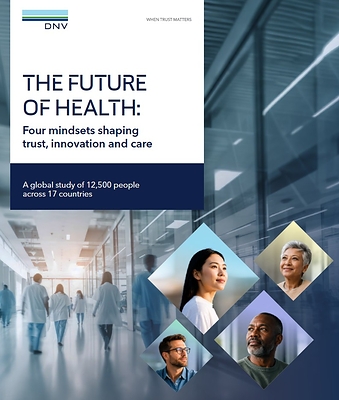
A global survey of 12,500 people across 17 countries found that mindset is a stronger indicator of trust than traditional demographic factors such as age, income or geography.
The findings, published in DNV's new report The Future of Health: Four mindsets shaping trust, innovation and care challenge conventional approaches to audience segmentation and identify four distinct trust mindsets that influence how people evaluate healthcare, innovation and the future of care.
With health ecosystems facing growing pressure from ageing populations, workforce shortages and rapidly advancing technologies, understanding what builds public confidence will become critical.
Contrary to popular belief, the report finds that trust cannot be explained through demographics alone. People with similar demographic profiles can hold very different attitudes towards innovation and the future of health. The report identified four distinct mindsets of people building trust in healthcare: Trusting Optimists, Human Connectors, Evidence Evaluators and Pragmatic Realists.
While Trusting Optimists are inclined to embrace new technologies that promise better outcomes and access to care, Human Connectors judge innovation through the lens of personal relationships and compassionate care. Evidence Evaluators look for transparency, accountability and proof that innovations deliver on their promises. The largest group identified in the research was Pragmatic Realists, people who judge innovation less by how advanced it is and more by whether it improves access, affordability and healthcare outcomes.
What makes these mindsets particularly significant is that they cut across traditional demographic boundaries. While age, income, health status and location all influence attitudes towards healthcare, they do not fully explain how people build trust. The research found, people with similar demographic profiles often belong to different trust mindsets, while people from very different backgrounds frequently share similar views on innovation and the future of care.
The findings also challenge common assumptions about age and technology. While older people are often viewed as more resistant to innovation and younger generations as more naturally accepting, the research suggests attitudes are shaped less by age than by people's experience of healthcare.
Across all four mindsets, one finding stood out. Nearly two-thirds of respondents, expressed concern that healthcare could become less personal as technology adoption accelerates, highlighting a shared expectation that innovation should strengthen and not replace the human experience of care.
The research suggests that people do not embrace innovation simply because it is new. Rather, confidence grows when technology is developed responsibly, assessed rigorously and implemented with patient outcomes in mind.
"Healthcare has never been innovating faster. But innovation alone won't determine the future of healthcare, trust will. Many assume trust is determined by age, gender or social status. Our research shows it's far more nuanced than that. Demographics influence trust, but do not define it." said Geir Fuglerud, CEO - Life Sciences at DNV. "The four mindsets we identify show that people build confidence in different ways, yet they share one important expectation: Technology should strengthen healthcare, not replace human care."
The report The Future of Health: Four mindsets shaping trust, innovation and care is available to download here.
 View original content to download multimedia:https://www.prnewswire.co.uk/news-releases/public-trust-in-health-innovation-is-shaped-more-by-mindset-than-demographics-dnv-research-finds-302833319.html

Die Einigung zwischen den USA und dem Iran auf ein Rahmenabkommen zur Beendigung des Iran-Kriegs sorgt in der Handelsschifffahrt für vorsichtige Erleichterung. Besonders im Fokus steht die Straße von Hormus, eine der wichtigsten Seepassagen für den weltweiten Öl- und Flüssiggas-Handel. Seit Beginn des Konflikts Ende Februar ist die Meerenge weitgehend blockiert, zahlreiche Handelsschiffe sitzen im Persischen Golf fest. Nun soll die Passage nach der geplanten Unterzeichnung des Abkommens wieder geöffnet werden.
US-Präsident Donald Trump kündigte an, dass die Straße von Hormus nach dem Abschluss der Vereinbarung wieder für den Verkehr freigegeben werden solle. Die Unterzeichnung ist für Freitag in Genf vorgesehen. Für die deutsche Handelsschifffahrt wäre dies ein entscheidender Schritt zur Normalisierung. „Die Signale aus den Gesprächen zwischen den USA und dem Iran machen auch der Schifffahrt Hoffnung“, sagte Martin Kröger, Hauptgeschäftsführer des Verbands Deutscher Reeder (VDR). Zugleich mahnte er, es müsse sich erst zeigen, ob die Passage dauerhaft sicher befahrbar sein werde. Man sei „vorsichtig optimistisch“.
Die Branche hat allen Grund, auf rasche Entspannung zu hoffen. Nach Angaben des VDR sitzen aktuell noch 46 Schiffe deutscher Reedereien mit rund 1.000 Seeleuten im Persischen Golf fest. Die Blockade der Meerenge trifft nicht nur die Reedereien, sondern bremst den globalen Energiehandel. Die UN-Sonderorganisation für Seeschifffahrt (IMO) begrüßte die Einigung ausdrücklich. Seit Ausbruch des Konflikts wurden der IMO zufolge 46 Angriffe auf Handelsschiffe in der Region bestätigt, bei denen 14 Seeleute ums Leben kamen.
Trotz der diplomatischen Fortschritte sehen Branchenverbände die Lage in der Region weiter kritisch. Der internationale Schifffahrtsverband Bimco bewertet die Sicherheitslage in der Straße von Hormus auch nach Bekanntwerden des Rahmenabkommens als instabil. Eine Durchfahrt bleibe sehr riskant, heißt es aus dem Verband. Für Reeder und Charterer stellt sich damit die Frage, wie schnell und in welchem Umfang sie ihre Routen wieder über die Meerenge führen können – oder ob Ausweichrouten zumindest mittelfristig bestehen bleiben müssen.
Für den Moment überwiegt in der Schifffahrt die Hoffnung, dass die geplante Vereinbarung in Genf die Voraussetzungen für eine nachhaltige Entspannung an einem der neuralgischsten Punkte des globalen Seehandels schafft. Ob und wie schnell sich die Zahl der festliegenden Schiffe reduziert und sich die Risikoeinschätzungen der Versicherer und Verbände anpassen, dürfte entscheidend dafür sein, wann sich der Verkehr durch die Straße von Hormus wieder weitgehend normalisiert.



