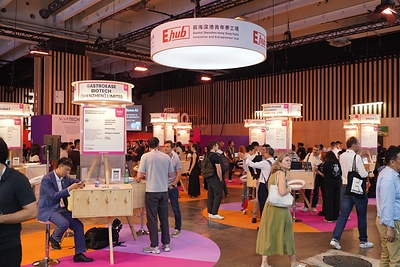
PARIS, June 27, 2026 /PRNewswire/ -- The Qianhai Shenzhen-Hong Kong Youth Innovation and Entrepreneur Hub (Ehub) made its debut at Viva Technology (VivaTech) Paris 2026, held from June 17 to 20, marking its first participation in Europe's leading startup event and one of the world's premier technology and innovation exhibitions.
Ehub's debut at VivaTech underscores its growing role as a gateway connecting the Guangdong-Hong Kong-Macao Greater Bay Area (GBA) with the global tech ecosystem. As Shenzhen further strengthens its international profile through major global events, including hosting the 2026 APEC meeting later this year, Ehub is expanding opportunities for startups to build international partnerships, access overseas markets and engage with cross-border innovation communities.
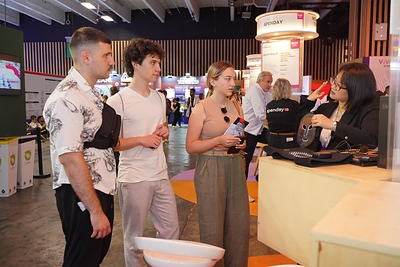
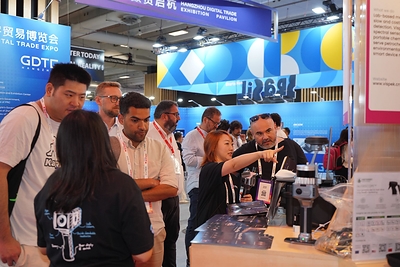
At VivaTech, Ehub led a delegation of six Hong Kong startups to Paris, including Vispek, GEE•D, InnAIO, SkylandX, GastroEase Biotech and i2Cool, representing sectors such as artificial intelligence, biotechnology, green technology and smart hardware.
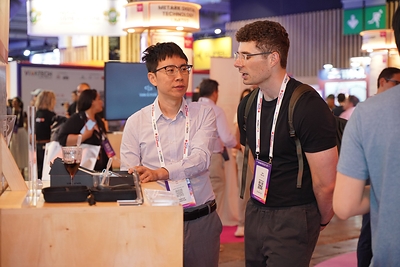
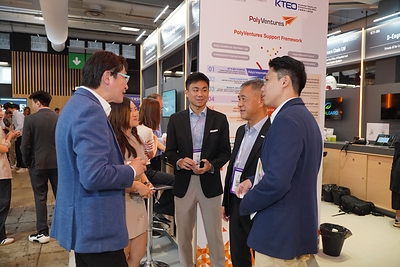
Throughout the exhibition, the delegation presented their solutions to global investors, industry leaders and potential business partners, while engaging in discussions on technology commercialization, investment and talent development. The event provided participating companies with valuable opportunities to expand their international networks and explore new collaborations across Europe and beyond.
"VivaTech provides an excellent platform to showcase the GBA's innovation strengths to the world," said Peter Mok, Ehub's General Manager. "By bringing together entrepreneurs, investors and technology leaders, we aim to foster international collaboration, create new opportunities for startups, and strengthen the GBA's position as a globally connected innovation hub."
Tony Gong, Marketing Manager of Vispek noted, "We received strong interest in our spectral imaging solutions from customers around the world, engaged with potential investors, and identified promising collaboration opportunities. The feedback we gained will also help us further refine our products for global markets."
"Our millisecond-level real-time translation and voice cloning technologies attracted strong interest from international buyers and investors. We sold out all demonstration units and secured multiple overseas partnership opportunities, marking a highly successful first step in our global expansion," shared Eva Yu, Partner and Head of China Business at InnAIO.
As a key platform for Shenzhen–Hong Kong innovation cooperation, Ehub connects talent, technology and capital to accelerate cross-border innovation and research commercialisation. Supporting this mission, five of Hong Kong's universities ranked among the QS World University Rankings Top 100 — including The University of Hong Kong, The Chinese University of Hong Kong, The Hong Kong University of Science and Technology, The Hong Kong Polytechnic University and Hong Kong Baptist University— have established innovation centres or research bases at Ehub. Their presence highlights collaboration between universities, industry and the technology sector, further strengthening the GBA's innovation ecosystem.
Building on its momentum, Ehub will continue to expand its international network, equipping next-generation startups with the resources, cross-border platforms, and global connections required to scale internationally.
About Ehub
Jointly initiated by the Qianhai Authority, the Hong Kong Federation of Youth Groups, and the Shenzhen Youth Federation, Ehub is an internationally oriented innovation and entrepreneurship platform that officially launched operations on December 7, 2014.
Ehub focuses on strategic sectors including artificial intelligence, embodied intelligence, life and health technologies, cultural and sports tech, and fintech. It was named the only national cross-border demonstration zone for youth innovation and entrepreneurship, and the Guangdong-Hong Kong and Guangdong-Hong Kong-Macao Greater Bay Area youth innovation and entrepreneurship bases.
As of May 2026, Ehub is home to 415 enterprises, of which 92 are recognised national high-tech enterprises, and collectively, the park companies have raised over RMB 9.5 billion in funding to date.
For more information, please visit www.ehub.hk.cn
 View original content to download multimedia:https://www.prnewswire.co.uk/news-releases/qianhai-ehub-brings-greater-bay-area-innovation-to-vivatech-paris-2026-302812584.html

Die Schweiz stimmt an diesem Wochenende über eine der umstrittensten Initiativen der vergangenen Jahre ab: „Keine 10-Millionen-Schweiz!“. Der Vorstoß der nationalkonservativen Schweizerischen Volkspartei (SVP), auch bekannt als Schweizerische Volkspartei oder Swiss People's Party, sieht vor, die ständige Wohnbevölkerung des Landes bis 2050 auf maximal zehn Millionen Menschen zu begrenzen. Nach ersten Hochrechnungen tendieren die Stimmbürgerinnen und Stimmbürger dazu, die Initiative abzulehnen – ein Ergebnis, das im Vorfeld keineswegs sicher schien.
Die Initiative, die in der Verfassung verankert werden soll, würde den Bund verpflichten, Gegenmaßnahmen zu ergreifen, sobald die Bevölkerung 9,5 Millionen erreicht. Die Schweiz zählte Ende 2025 bereits gut 9,1 Millionen Einwohner – rund 1,7 Millionen mehr als 2002. Haupttreiber des Wachstums ist die Zuwanderung. Rund 28% der im Land lebenden Menschen besitzen keinen Schweizer Pass. Viele stammen aus EU-Staaten wie Italien, Deutschland und Portugal, hinzu kommen Personen aus Drittstaaten, darunter Asylsuchende.
Unterstützer der Initiative argumentieren, das Land stoße an seine Belastungsgrenzen. Sie verweisen auf steigende Mieten, überlastete Verkehrswege, Staus sowie eine als problematisch wahrgenommene Entwicklung bei Gewalt und Kriminalität, die sie mit einer höheren Zuwanderung verknüpfen. Ziel sei es laut Kampagnenmotto, „zu bewahren, was wir lieben“. Die SVP wirbt mit auffälligen Aufklebern, Fahnen und Plakaten in Nationalfarben, um eine Begrenzung des Bevölkerungswachstums als Schutz der Lebensqualität zu präsentieren.
Gegen die Initiative stellen sich der Bundesrat, das Parlament, die Kantone sowie die meisten übrigen großen Parteien, gestützt von Wirtschaftsverbänden und Gewerkschaften. Sie warnen, ein starres Bevölkerungs- und damit faktisches Zuwanderungslimit könne den bereits bestehenden Arbeitskräftemangel verschärfen. Laut Bundesamt für Statistik waren im ersten Quartal 2026 rund 1,87 Millionen ausländische Erwerbstätige in der Schweiz beschäftigt. Etwa vier von fünf kamen aus EU- oder EFTA-Staaten oder dem Vereinigten Königreich, der Rest aus Drittstaaten. Viele arbeiten in Bereichen wie Gesundheitswesen, Bau und Gastgewerbe – Sektoren, die stark auf Personal aus dem Ausland angewiesen sind.
Ein weiterer Konfliktpunkt ist das Verhältnis zur Europäischen Union. Die Initiative sieht vor, dass die Schweiz in letzter Konsequenz das Abkommen über die Personenfreizügigkeit mit der EU kündigen müsste, sollte die Obergrenze sonst nicht zu halten sein. Gegner befürchten, dies könnte die bilateralen Beziehungen und den Zugang zum europäischen Arbeitsmarkt belasten. Befürworter halten dem entgegen, nur mit klaren quantitativen Vorgaben lasse sich der Druck auf Wohnungsmarkt, Infrastruktur und öffentliche Dienste nachhaltig begrenzen.
Parallel zur Abstimmung über die 10-Millionen-Grenze entscheiden die Stimmberechtigten auch über eine Verschärfung des Zivildienstgesetzes. Im Fokus der innenpolitischen Debatte steht jedoch vor allem die Frage, wie die Schweiz Wachstum, Wohlstand und gesellschaftlichen Zusammenhalt künftig austarieren will. Das Ergebnis der Volksabstimmung dürfte zwar die Initiative selbst klären, die Grundsatzdiskussion über Zuwanderung, Arbeitskräftebedarf und Lebensqualität in der Alpenrepublik jedoch kaum beenden.