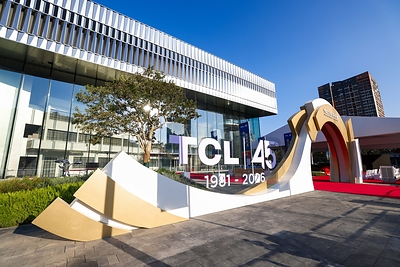
Built on the site where TCL's journey began in 1981, the museum chronicles 45 years of innovation, transformation, and industrial progress while looking ahead to the brand's next chapter.
HUIZHOU, China, Sept. 28, 2026 /PRNewswire/ -- TCL today marked its 45th anniversary with the Inauguration Ceremony of the TCL Industrial Museum in Huizhou, the city where TCL was founded in 1981. Built on the former factory site of TCL's predecessor, TTK, the museum chronicles TCL's evolution alongside the development of China's electronics industry.
"The TCL Industrial Museum is not only about preserving the journey behind us, but also about inspiring the journey ahead," said Li Dongsheng, Founder and Chairman of TCL. "Over the past 45 years, TCL has grown through entrepreneurship, transformation and innovation. As we enter a new chapter, we will carry forward the same boldness and commitment to create new possibilities for the future."
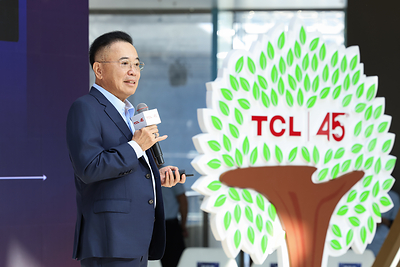
45 Years of Innovation and Transformation
Spanning more than 23,000 square meters, including over 9,000 square meters of exhibition space, the museum brings together over 3,000 curated pieces across six exhibition halls and a central atrium.
The collections cover key eras of technological development, with highlights including a 1920s Nipkow mechanical scanning disk, China's first television set, China's first commercial computer, and the world's first mass-produced printed OLED 4K display developed by TCL CSOT in 2024. The television gallery also features more than 100 vintage television sets from around the world.
Strategic Focus Powers Global Growth
Beyond preserving products and historical milestones, the museum shows how TCL has successfully adapted its business strategy over the years as industries, technologies, and markets have evolved. One of the most consequential turning points came in 2019.
In 2019, TCL completed a major restructuring that established TCL Technology and TCL Industries as two independently operated entities. With TCL Technology focusing on display and new energy businesses, and TCL Industries specializing in smart devices and services, the restructuring has enabled each business to strengthen its strategic focus and unlock greater growth potential. From 2019 to 2025, TCL Technology's revenue more than tripled from approximately US$8.4 billion to US$27 billion, while TCL Industries' revenue more than doubled from US$11.7 billion to approximately US$24.9 billion.
Alongside revenue growth, the restructuring has also strengthened TCL's position across its core businesses. TCL TV ranked No. 2 globally by shipment volume in 2025. According to Omdia, TCL CSOT ranked No. 2 globally in overall TV panel market share that year. In clean energy, TCL Zhonghuan is the world's largest producer of solar-grade silicon crystals and a key supplier in the global silicon wafer market. Beyond pure business performance, TCL's broader progress was also recognized in 2026, when it was named one of TIME's World's Best Companies.
The Next Chapter: Technology Leadership with Purpose
With the museum sharing the journey that brought TCL to where it is today, the brand is now looking to the future with a series of initiatives. As a Worldwide Olympic and Paralympic Partner, TCL is connecting people with technology through one of the world's most universal cultural platforms, while TCLArt, TCLforHer, TCLGreen, and TCLYoung are extending the brand's engagement across culture, society, and sustainability.
At 45, the boldness and commitment that have shaped TCL's story remain central to its future. TCL will continue advancing its technology, sustainable growth and global brand-building efforts, while strengthening its role as a responsible corporate citizen and trusted technology brand.
About TCL
Founded in 1981, TCL is dedicated to empowering smarter, healthier lifestyles through next-generation experiences. Operating through two independent entities, TCL Industries and TCL Technology, TCL delivers innovative solutions spanning TVs, smartphones, audio products, smart home devices, display technologies, and clean energy.
Today, with 50 R&D centers and 47 manufacturing bases globally, TCL operates in over 160 countries and regions, reinforcing its position as a globally competitive smart technology brand. To further inspire greatness, TCL has become an official Worldwide Olympic and Paralympic Partner in the Home Audiovisual Equipment and Home Appliances category.
 View original content to download multimedia:https://www.prnewswire.co.uk/news-releases/tcl-marks-45th-anniversary-with-inauguration-of-the-tcl-industrial-museum-302891580.html

Während die Dieselpreise in Teilen Italiens neue Höchststände erreichen, zeichnet sich in Luxemburg eine spürbare Entspannung ab – und in Deutschland profitieren Autofahrer nur eingeschränkt von Steuererleichterungen. In Südtirol kletterte der Dieselhöchstpreis in Bozen Medienberichten zufolge auf 2,288 Euro pro Liter und lag damit am Mittwoch über dem Durchschnitt auf den italienischen Autobahnen. Dort wurden im Schnitt 2,287 Euro pro Liter Diesel fällig. Im gesamtstaatlichen Vergleich ist Südtirol damit weiterhin Spitzenreiter bei den Preisen.
Auch in anderen italienischen Regionen zogen die Dieselpreise deutlich an. In Trient stieg der Selbstbedienungspreis auf 2,274 Euro pro Liter, ein Anstieg um 1,1 Cent binnen eines Tages. Die stärksten Preissprünge wurden jedoch nicht in den teuersten Regionen verzeichnet, sondern im Nordosten und im Westen des Landes: In Friaul verteuerte sich ein einmaliges Volltanken von 50 Litern Diesel um 1,25 Euro, in Ligurien um 1,20 Euro, im Latium um 1,15 Euro. Auf den Autobahnen wurden Tagesanstiege von bis zu zwei Cent je Liter registriert. Der Präsident der nationalen Verbraucherunion, Massimiliano Dona, wirft der Regierung in Rom vor, zu wenig gegen die Preisanstiege zu unternehmen, und warnt vor möglichen Folgen für die Inflation.
Parallel dazu zeigt sich in Luxemburg ein gegenteiliger Trend. Dort wird Diesel nach Angaben des Wirtschaftsministeriums ab Mitternacht um 6,2 Cent je Liter günstiger und kostet dann 1,995 Euro. Damit fällt der Preis unter die Marke von zwei Euro. Die Benzinsorten Super 95 und Super 98 bleiben stabil bei 1,837 Euro beziehungsweise 2,049 Euro je Liter. Auch Heizöl wird in Luxemburg billiger: Bei Abnahme von mindestens 1.500 Litern sinkt der Literpreis am Mittwoch ebenfalls um 6,2 Cent auf 1,477 Euro. Der Großherzogtum bewegt sich damit preislich klar unter dem Niveau vieler Regionen in Italien.
In Deutschland wiederum kommt eine bereits beschlossene Steuerentlastung für Autofahrer nur begrenzt an. In Sachsen-Anhalt senkte die Bundesregierung vor rund einer Woche die Steuern auf Kraftstoffe um 17 Cent pro Liter. Laut dem Portal Benzinpreis-blitz kostete Super E10 am Mittwochnachmittag im Landesdurchschnitt 2,12 Euro pro Liter und damit lediglich rund sieben Cent weniger als am Nachmittag vor Inkrafttreten des Rabatts. Der Dieselpreis lag bei 2,19 Euro pro Liter, rund 15 Cent unter dem Vorkrisenniveau. Die Entlastung erreicht damit nicht vollständig die angekündigte Höhe, zudem spielt laut den Erhebungen die Uhrzeit eine wesentliche Rolle: Je nach Tageszeit fällt der Vorteil für Verbraucher unterschiedlich aus.
Im europäischen Vergleich entstehen damit deutliche Preisunterschiede für Dieselverbraucher. Während Italien mit Rekordständen in Teilen des Landes und spürbaren Tagesanstiegen im Fokus steht, nutzt Luxemburg den Spielraum für Preissenkungen. Deutschland versucht, über Steuersenkungen gegenzusteuern, bislang mit begrenzter Durchschlagskraft an der Zapfsäule. Für Verbraucher bleibt das Umfeld volatil – und die Frage, in welchem Umfang staatliche Eingriffe und Marktbewegungen künftig tatsächlich im Portemonnaie der Autofahrer ankommen.