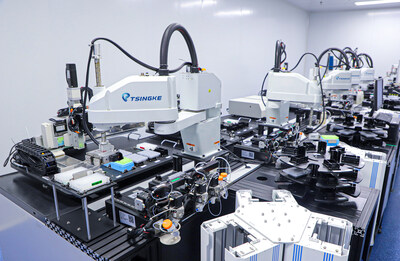
BEIJING, April 15, 2026 /PRNewswire/ -- As the pace of biotechnology research accelerates, companies are increasingly challenged to balance rapid innovation with the protection of sensitive genetic information. Responding to this trend, Tsingke Biotech today introduced its "Zero-Contact Sequences" system—a fully automated, on-site platform designed to minimize the risk of sequence exposure while offering a practical model for secure and efficient R&D.
Industry Trends: Growing Focus on Sequence Security
Across antibody therapeutics, cell and gene therapies, oligonucleotide drugs, industrial enzymes, and AI-driven molecular design, securing core genetic sequences is now a key factor in both IP protection and staying competitive. Key industry trends include:
The Zero-Contact Approach: Practical Security and Efficiency
Tsingke's system enhances gene synthesis security in synthetic biology by:
Forward-Looking Perspective: Shaping the Future of Biotech R&D
Nan Zhang, Global Marketing Manager at Tsingke Biotech, said, "As synthetic biology and biotech R&D evolve, ensuring gene synthesis security and protecting intellectual property are more critical than ever. The Zero-Contact system represents more than a step forward in sequence security—it reflects our forward-looking approach to the future of gene research. Through innovations like this, we aim to offer industry-wide insights and contribute to more secure, efficient, and sustainable R&D practices."
About Tsingke Biotech
Tsingke Biotech is a leading innovator in synthetic biology, dedicated to building "the world's great gene factory." By combining proprietary reagents, consumables, and synthesis equipment with AI-driven molecular manufacturing technologies, Tsingke Biotech delivers efficient, high-quality gene synthesis services supporting industries from biopharma to agriculture, food, and environmental sciences.
Contact: market@tsingke.com.cn
Photo - https://mma.prnewswire.com/media/2956967/IMG_2036.jpg
 View original content:https://www.prnewswire.co.uk/news-releases/tsingke-unveils-zero-contact-gene-synthesis-to-safeguard-core-genetic-sequences-302742992.html

Die Schweizer Großbank UBS hat ihre Einschätzung für die Aktien des Bausoftware-Spezialisten Nemetschek deutlich verschärft und die Titel von „Neutral“ auf „Sell“ abgestuft. Das Kursziel wurde von zuvor 76 Euro auf 56 Euro gesenkt und damit in etwa auf das aktuelle Kursniveau angepasst. An der Börse gerieten die Papiere daraufhin spürbar unter Druck; seit dem Rekordhoch im August haben die Aktien bereits fast 60 Prozent an Wert verloren.
Im Mittelpunkt der Kritik von UBS-Analyst Michael Briest stehen die langjährigen Vertragsstrukturen von Nemetschek. Diese seien im ersten Jahr für Umsatz- und Cashflow-Entwicklung zwar positiv, könnten aber ab dem zweiten Jahr zunehmend belastend wirken. Aus Sicht des Experten droht sich das Vertragsmodell damit „von einem Wachstumsmotor in ein Wachstumshemmnis“ zu verwandeln. Briest sieht den bislang starken Cashflow des Unternehmens durch diese Struktur gefährdet.
Zudem verweist die UBS auf die wachsenden Verdrängungssorgen rund um Künstliche Intelligenz. Der Markt könnte die Risiken aus den langfristigen Verträgen mit den Erwartungen eines raschen Umstiegs auf KI-basierte Lösungen vermischen. In einem Umfeld, in dem technologische Innovation und Anpassungsfähigkeit an neue Software-Generationen entscheidend sind, geraten traditionelle Angebotsmodelle unter zusätzlichen Rechtfertigungsdruck.
Charttechnisch bleiben die Nemetschek-Titel unter ihrer 21-Tage-Durchschnittslinie, die bereits seit dem Rekordhoch vom August als Widerstand fungiert und den kurzfristigen Abwärtstrend bestätigt. Die Herabstufung durch UBS erhöht den Druck auf das Management, die Tragfähigkeit der bestehenden Vertrags- und Produktstrategie unter Beweis zu stellen. Wie stark sich die Kombination aus möglicher Cashflow-Abschwächung und KI-Konkurrenz tatsächlich auf die mittelfristige Entwicklung von Nemetschek auswirkt, bleibt indes offen und hängt wesentlich von der Reaktion des Unternehmens und der Nachfrage seiner Kunden ab.