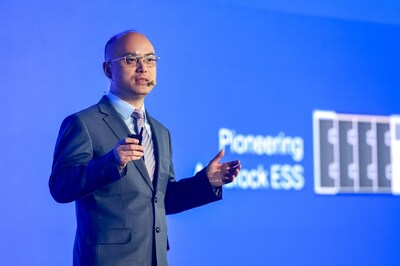
HEFEI, China, April 27, 2026 /PRNewswire/ -- Sungrow, the globally leading PV inverter and energy storage system (ESS) provider, presented its full-scenario solution at Sungrow GRES (Global Renewable Energy Summit) 2026 on April 24th, outlining how integrated energy solutions can address the surging power demands and structural challenges facing industries worldwide.
Sectors such as mining & microgrid, hydrogen production, and EV charging are expanding at an unprecedented speed, with power supply becoming increasingly critical. According to third-party analysis, combined annual electricity demand from these sectors is expected to reach 4,000 TWh by 2030, while the power costs have already become a major operational challenge.
Despite a shared demand for reliable and affordable electricity, each industry faces unique pain points. Additionally, the wide divergence in operating environments, grid strength, load conditions, and power quality requirements underscores the need for scenario-specific energy solutions. Sungrow believes that premium, customized energy solutions are essential to addressing the diverse needs of different scenarios.
Customized Designs for Full-Scenario Applications
AIDC Scenario
In the digital era, rapid advances in AI are driving a surge in data center power demand, calling for a next-generation power supply architecture defined by high efficiency, high density, and strong resilience. Leveraging its expertise in power electronics and renewable energy, Sungrow entered the AIDC (Artificial Intelligence Data Center) sector last year with a comprehensive grid-to-chip solution. This year, Sungrow will launch a dedicated SST (Solid-State Transformers) solution for data centers, significantly reducing footprint while improving efficiency. Sungrow will also integrate grid-forming technology in AIDC ESS to mitigate grid disturbances and enhance system stability.
Mining Microgrid Scenario
Most mines are located in remote areas with limited grid access, complex loads, and strict power stability requirements, making energy supply a significant challenge. Sungrow addresses this with an integrated PV–wind–storage–EV charger–controller solution, reducing energy costs by 20–50% compared with a diesel generator. Given the variability of mining loads, Sungrow leverages advanced simulation capabilities to deliver tailored solutions with optimized equipment configurations, ensuring a reliable power supply and reduced CAPEX. Moreover, a five-level progressive protection system further safeguards stable operations under extreme conditions.
PV-ESS-EV Charging Integrated Scenario
Many EV charging projects suffer from poor coordination among system components, resulting in underperformance and reduced returns. Sungrow addresses this challenge with a one-stop, fully integrated solution that enables deep synergy across equipment and incorporates AI-driven operations, increasing overall revenue by more than 50%. Meanwhile, grid-forming technology has been extended to C&I applications to mitigate grid fluctuations caused by large-scale ultra-fast charging. In addition, Sungrow's systems enable seamless integration with VPPs (Virtual Power Plants) through unified interfaces, unlocking greater value through diversified, future-ready revenue streams.
Hydrogen Production Scenario
In hydrogen production applications, Sungrow optimizes equipment configuration, reducing CAPEX by over 20% through PV–wind–storage–hydrogen integration and system-level simulation. In parallel, PV–storage–hydrogen DC coupling and flexible production technologies enhance energy efficiency and lower electricity costs by more than 10%.
Powering the Next Phase of Energy Transition
Renewable energy is shifting from a supplementary resource to a primary power source. This transition drives demand for premium energy solutions built on multi-energy integration for cost-efficient power, systematic grid-forming technologies for enhanced stability, and customized designs tailored to diverse scenarios. Sungrow believes that the deep integration of premium products and proven expertise is key to delivering truly scenario-adapted solutions.
Looking ahead, Sungrow will continue to build a more flexible, resilient, and sustainable energy landscape, helping industries meet growing energy demand and accelerate the transition to a low-carbon future.
About Sungrow
Sungrow, a global leader in renewable energy technology, has pioneered sustainable power solutions for over 29 years. As of Dec 2025, Sungrow has installed over 1000 GW of power electronic converters worldwide. The company is recognized as the world's most bankable PV inverter and energy storage company (BloombergNEF). Its innovations power clean energy projects across the globe, supported by a network of 520 service outlets guaranteeing excellent customer experiences. At Sungrow, we're committed to bridging to a sustainable future through cutting-edge technology and unparalleled service. For more information, please visit: www.sungrowpower.com/en
Photo - https://mma.prnewswire.com/media/2966153/image1.jpg
Logo - https://mma.prnewswire.com/media/1344575/Logo.jpg
 View original content:https://www.prnewswire.co.uk/news-releases/sungrow-unveils-full-scenario-solution-to-address-emerging-global-energy-challenges-302754059.html

Die Aktionäre der Bossard Holding AG setzen weiter auf Verlässlichkeit bei der Ausschüttung: Die Generalversammlung des Innerschweizer Verbindungstechnik-Spezialisten hat am 10. April 2026 eine unveränderte Dividende von 3.90 Franken je Aktie für das Geschäftsjahr 2025 beschlossen. Im Vergleich zum Vorjahr bleibt der Betrag pro Titel damit stabil, während sich die gesamte Ausschüttungssumme dennoch leicht verringert. Bossard zahlt insgesamt 30.06 Millionen Franken an seine Anteilseigner aus – ein Rückgang um 2.43 Prozent gegenüber dem Vorjahr.
Am Tag der Hauptversammlung schloss die Bossard-Aktie an der SIX Swiss Exchange bei 156.00 Franken. Seit Montag wird das Papier ex Dividende gehandelt, was optisch zu teils deutlichen Kursabschlägen führen kann, ohne dass sich an den fundamentalen Daten unmittelbar etwas ändert. Auf Basis des beschlossenen Ausschüttungsbetrags ergibt sich für 2025 eine Dividendenrendite von 2.49 Prozent. Damit ist die Rendite höher als im Vorjahr, als sie 2.04 Prozent betrug – ein Effekt, der auch auf den gefallenen Aktienkurs zurückzuführen ist.
Die Kursentwicklung der vergangenen Jahre fällt für Investoren ernüchternd aus: Auf Drei-Jahres-Sicht hat die Bossard-Aktie rund 33.05 Prozent an Wert eingebüsst. Einschliesslich Dividenden summiert sich die tatsächliche Rendite auf minus 30.33 Prozent und liegt damit leicht über der reinen Kursentwicklung, bleibt aber deutlich im negativen Bereich. An der Börse kommt das Unternehmen derzeit auf eine Marktkapitalisierung von 1.202 Milliarden Franken. Auf Basis der aktuellen Bewertung weist Bossard ein Kurs-Gewinn-Verhältnis von 16.79 auf.
Operativ bleibt der Blick auf den Geschäftsverlauf gerichtet. Das Unternehmen hat für den 10. April eine Ad-hoc-Mitteilung zum Umsatz im ersten Quartal 2026 nach Richtlinie Art. 53 des Kotierungsreglements veröffentlicht. Details sind über die Investor-Relations-Seite von Bossard abrufbar. Im Geschäftsjahr 2025 erzielte die Gruppe einen Umsatz von 1.069 Milliarden Franken. Parallel dazu signalisieren Analysten Vertrauen in die Ausschüttungsfähigkeit: Laut FactSet-Prognosen dürfte die Dividende für 2026 auf 4.25 Franken steigen, was einer geschätzten Dividendenrendite von 2.71 Prozent entspräche.
Mit der Kombination aus stabiler Dividende, moderater Bewertung und schwacher historischer Kursbilanz positioniert sich Bossard als klassischer Qualitätswert mit Ertragsfokus, dessen weitere Entwicklung eng von der Nachfrage im Industrie- und Fertigungssektor abhängen dürfte. Wie stark sich der jüngste Quartalsumsatz und das konjunkturelle Umfeld auf Margen und Ausschüttungspolitik auswirken, werden die kommenden Berichtsperioden zeigen.